


Description
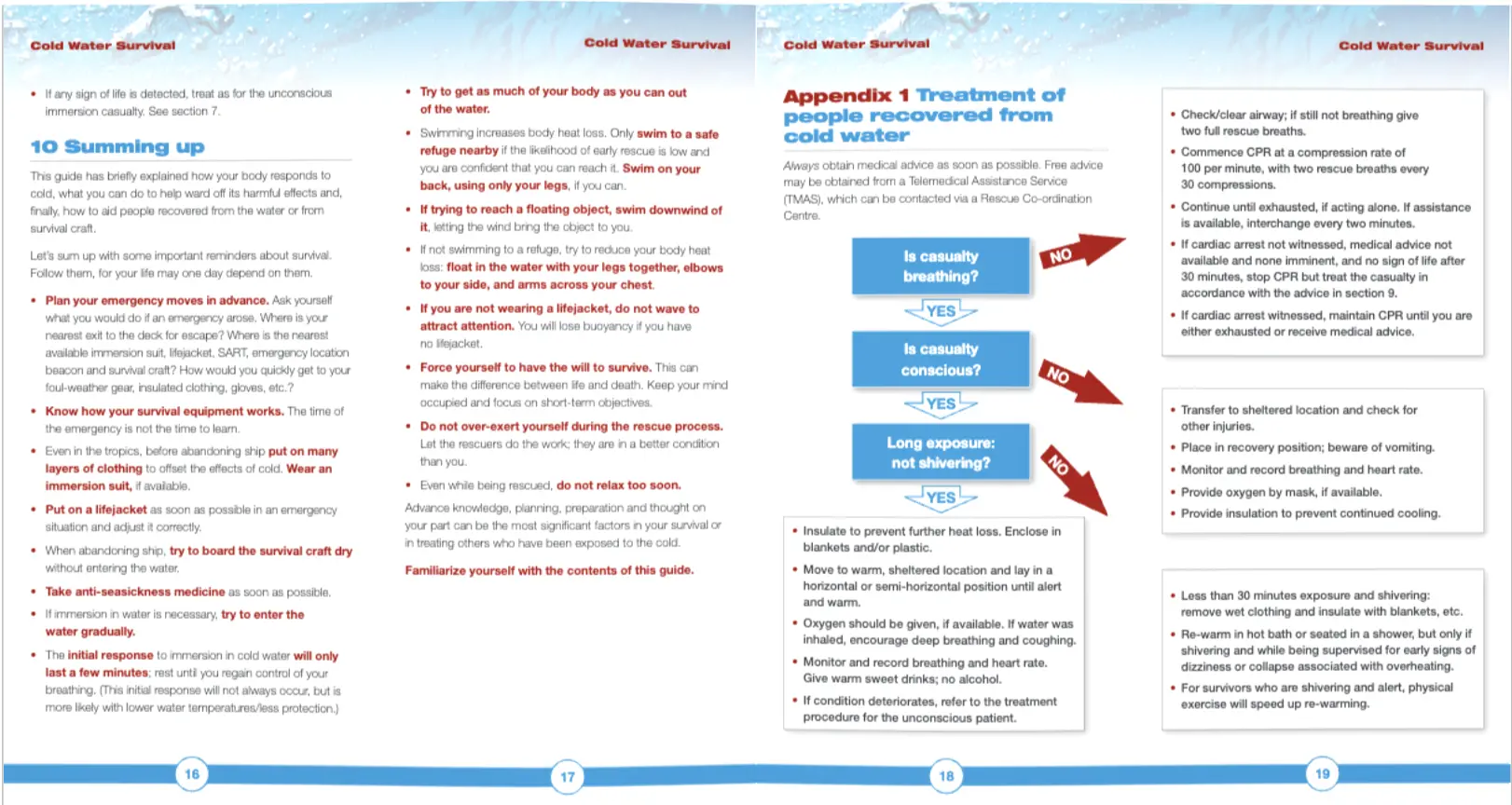
A Pocket Guide for Cold Water Survival, 2012 Edition (IB946E)
This publication is a guide to cold water survival. It begins by exploring cold water hazards and their effects before going on to look at the following:
- The survival phase: in a survival craft or cold water
- rescue guidance for those engaged in search and rescue
- medical advice and guidance.
A Pocket Guide to Cold Water Survival is a practical cold water survival guide created for seafarers and maritime professionals who may face cold-water emergencies. It explains the hazards of cold exposure, the body’s response to freezing conditions, and the actions that can improve survival chances in an emergency.
The guide covers actions prior to abandoning ship, survival in a survival craft, survival in the water, rescue guidance for search and rescue personnel, and treatment of people recovered from cold water or survival craft.
Why This Pocket Guide to Cold Water Survival Matters
Cold-water exposure can become fatal very quickly when people do not understand what is happening to the body or how to respond correctly. This guide gives practical survival knowledge that can help seafarers make better decisions during abandonment, rescue, and post-recovery treatment.
Readers interested in polar and cold-environment operations may also find useful the Polar Code, 2016 Edition (I191E) Book, Course Criteria for Service on Ships Operating in Polar Waters, and The Ice Navigation and Seamanship Handbook – 2nd Edition.
For survival, rescue, and casualty care support, this title also works well alongside Marine Survival, 3rd Edition Book, A Pocket Guide to Recovery Techniques, 2014 Edition (IA947E) Book, and International Medical Guide for Ships Book, 3rd Edition.
Who Should Read A Pocket Guide to Cold Water Survival?
This book is ideal for seafarers, cadets, ship officers, survival-training providers, and maritime personnel involved in emergency preparedness, search and rescue, or casualty care in cold conditions.
Whether used as a quick-reference survival guide or a supporting training resource, it provides practical knowledge that can improve preparedness and decision-making in life-threatening cold-water situations.
This guide briefly examines the hazards of exposure to the cold that may endanger life and provides advice based on the latest medical and scientific opinions on preventing or minimizing those dangers. It is a sad fact that people continue to die at sea through a lack of this knowledge. Knowing what is likely to happen if exposed to cold water is a survival aid. A thorough understanding of the information contained in this booklet may someday save your life – or someone else’s.
It is essential to realize that you are not helpless to affect your survival in cold water. Understanding your body’s response and simple self-help techniques can extend your survival time, particularly if you wear a lifejacket. You can make a difference; this guide is intended to show you how.
Contents Listing:
- Introduction
- Cold water hazards and their effects: the knowledge that can improve survival chances
- Actions prior to abandoning the ship
- The survival phase: in a survival craft
- The survival phase: in the water
- The rescue phase: guidance for those engaged in search and rescue
- Treatment of people recovered from cold water
- Treatment of people recovered from survival craft
- The apparently dead
- Summing up
Frequently Asked Questions
What is A Pocket Guide to Cold Water Survival used for?
It is used to help seafarers understand cold-water hazards, improve survival chances, and support rescue and recovery decisions in emergencies.
Does it cover survival in the water and in survival craft?
Yes, it covers both the survival phase in cold water and the survival phase in a survival craft.
Does it include rescue guidance?
Yes, it includes guidance for those engaged in search and rescue.
Does it cover medical treatment after recovery?
Yes, it includes treatment guidance for people recovered from cold water and from survival craft.
Who should read this guide?
It is suitable for seafarers, officers, cadets, SAR personnel, and maritime first-aid providers.
Reviews
There are no reviews yet.