


Description
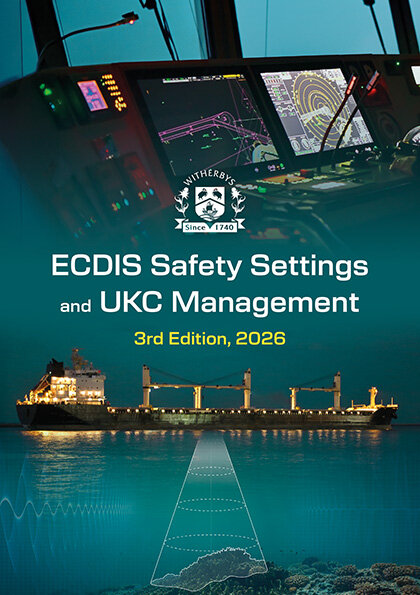
ECDIS safety settings are critical to safe navigation, Under Keel Clearance management and effective ECDIS operation. ECDIS Safety Settings and UKC Management – 3rd Edition, 2026 is a practical guide for Masters, Officers of the Watch, deck officers, ECDIS operators and bridge teams who need to understand safety contour, safety depth, display settings, route checks, UKC calculations and onboard passage planning.
About ECDIS Safety Settings and UKC Management 2026
ECDIS Safety Settings and UKC Management – 3rd Edition, 2026 is a professional maritime navigation reference that explains how the principal Electronic Chart Display and Information Systems safety settings should be understood, configured and checked by the ECDIS operator.
This updated edition provides practical guidance on how Under Keel Clearance should be calculated and managed by the navigator. It is designed to help bridge teams use ECDIS more effectively during passage planning, route checking, voyage monitoring and onboard navigation.
For deck officers working towards stronger bridge knowledge and senior roles, this publication is a useful companion resource alongside the Academy by Ephemeris Deck career path, the Course Finder, and our wider collection of ECDIS books and navigation resources.
The 2026 edition focuses on essential safety settings, including display settings, safety contour, safety depth, shallow contour, deep contour, isolated dangers, detection area, safety frame and route check parameters such as cross track distance.
Why ECDIS safety settings are essential
ECDIS safety settings must be configured correctly to help ensure sufficient UKC, support correct interpretation of Electronic Navigational Charts and ensure that charted objects are properly identified as dangers or hazards to navigation.
Incorrect settings can affect how the system highlights shallow water, hazards, isolated dangers, safety contour crossing and route risks. For this reason, officers must understand how safety settings are calculated, entered, reviewed and verified before and during the voyage.
This guide is especially useful for:
- Masters,
- Chief Mates,
- Officers of the Watch,
- deck officers,
- ECDIS operators,
- bridge teams,
- deck cadets and maritime students,
- training centres,
- vessel managers,
- and vessels that need stronger ECDIS safety setting, UKC management and passage planning procedures.
It also works well alongside related Academy resources such as ECDIS Passage Planning and Watchkeeping, the ECDIS Procedures Guide, and The ECDIS Manual – Second Edition.
What is included in this ECDIS safety settings guide
This 3rd Edition has been developed to provide a deeper understanding of the principal ECDIS safety settings and how they relate to Under Keel Clearance management. It is structured around three practical areas: ECDIS safety settings, UKC management and worked examples.
The guide includes content on:
- ECDIS standards,
- ECDIS alerts and alert management,
- chart accuracy and data quality,
- CATZOCs and CATZOC passage planning examples,
- case study learning, including the Kea Trader grounding,
- ECDIS display settings,
- display base, standard display, all/other display and custom display,
- ENC settings,
- safety contour and safety contour worked examples,
- safety depth,
- shallow contour and deep contour,
- two-colour and four-colour depth shading modes,
- isolated dangers and isolated danger display,
- detection area and safety frame,
- route check configuration,
- cross track distance,
- bridge team meetings and Master’s approval,
- UKC requirements and dynamic UKC requirements,
- UKC considerations,
- squat,
- height of tide,
- UKC calculations,
- vertical clearance,
- UKC management plans,
- minimum UKC requirements,
- S-129 and UKC management service providers,
- UKC parameters on ECDIS,
- passage planning calculation examples,
- UKC monitoring,
- monitoring UKC in coastal waters,
- and safety contour worked examples.
Authoritative external references that may be useful for readers include the IMO ECDIS Guidance for Good Practice, the IHO S-100 standards, and the STCW Convention.
Key benefits of understanding ECDIS safety settings
This guide helps maritime professionals:
- understand the purpose of key ECDIS safety settings,
- configure safety contour and safety depth more confidently,
- review shallow contour and deep contour settings,
- understand isolated dangers and detection areas,
- improve route check and cross track distance setup,
- calculate and manage Under Keel Clearance more effectively,
- connect UKC calculations with practical passage planning,
- support safer ENC interpretation,
- prepare for bridge team meetings and Master’s approval,
- review ECDIS settings before and during the voyage,
- reduce the risk of poor configuration or unsafe passage planning,
- and strengthen onboard navigation safety.
Core topics covered in ECDIS Safety Settings and UKC Management
ECDIS Safety Settings and UKC Management – 3rd Edition, 2026 is organised into three main sections covering safety settings, UKC management and worked examples.
1. ECDIS safety settings
This section explains the main ECDIS safety settings that operators need to understand. It covers ECDIS standards, ECDIS alerts, alert management, chart accuracy, CATZOCs, display settings, safety contour, safety depth, shallow contour, deep contour, isolated dangers, detection area, route checks and bridge team approval.
2. UKC management
This section explains how Under Keel Clearance should be calculated and managed onboard. It covers UKC requirements, dynamic UKC requirements, UKC considerations, squat, height of tide, UKC calculations, vertical clearance, UKC management plans, minimum UKC requirements, S-129, UKC management service providers, UKC parameters on ECDIS and UKC monitoring.
3. Safety contour worked examples
This section provides worked examples to illustrate how ECDIS safety settings relate to ENC limitations, tidal calculations and safe navigation decisions. These examples help officers understand how different scenarios can affect safety contour selection, UKC calculations and voyage planning.
Who should buy this ECDIS safety settings book
ECDIS Safety Settings and UKC Management – 3rd Edition, 2026 is ideal for:
- Masters,
- Chief Mates,
- Officers of the Watch,
- deck officers,
- ECDIS operators,
- bridge teams,
- deck cadets and maritime students,
- training organisations,
- vessel managers,
- ship operators,
- and yachts or vessels that need clearer procedures for ECDIS configuration, UKC management and safe navigation.
This book is especially useful for officers who want a practical onboard reference for configuring ECDIS correctly, calculating UKC, reviewing safety contour values and improving passage planning checks.
Why buy from Academy by Ephemeris
Academy by Ephemeris supports maritime professionals and yacht crew with trusted training resources, career development tools, course information and practical learning materials designed for real onboard use.
When you buy this guide through Academy, you can use it alongside our Books & Tools catalogue, the Deck career path, and the Course Finder to connect your learning resources with your wider career progression.
This book is a strong addition to any professional maritime library focused on ECDIS safety settings, UKC management, safety contour, route checking, passage planning and deck officer development.
ECDIS safety settings and UKC management summary
ECDIS Safety Settings and UKC Management – 3rd Edition, 2026 is a practical guide for officers who need to understand how ECDIS safety settings and Under Keel Clearance management work together during passage planning and voyage monitoring.
It explains how safety contour, safety depth, shallow contour, deep contour, isolated dangers, detection area, route check parameters and UKC calculations should be understood and applied onboard.
For Masters, Officers of the Watch, deck officers and ECDIS operators, this guide supports safer navigation, stronger bridge team procedures and more confident ECDIS configuration.
Frequently Asked Questions
What is ECDIS Safety Settings and UKC Management used for?
ECDIS Safety Settings and UKC Management is used to help navigators understand, configure and verify key ECDIS safety settings and manage Under Keel Clearance during passage planning and voyage monitoring.
Who should use this ECDIS safety settings guide?
This guide is suitable for Masters, Officers of the Watch, Chief Mates, deck officers, ECDIS operators, cadets, maritime students, training centres and vessel operators.
Does the book explain UKC calculations?
Yes. The guide explains Under Keel Clearance requirements, UKC considerations, squat, height of tide, UKC calculations, vertical clearance, UKC management plans, UKC parameters on ECDIS and UKC monitoring.
Does it cover safety contour and safety depth?
Yes. The guide covers safety contour, safety depth, shallow contour, deep contour, isolated dangers, detection areas, route checks and worked examples that help officers understand how these settings affect safe navigation.
Is this book useful for onboard ECDIS familiarisation?
Yes. This book is useful for onboard familiarisation because it gives officers a practical reference for understanding ECDIS configuration, safety settings, UKC management, route checking and passage planning.
Is this the 2026 edition?
Yes. This is the 3rd Edition, 2026 of ECDIS Safety Settings and UKC Management.
“`


Reviews
There are no reviews yet.