Description
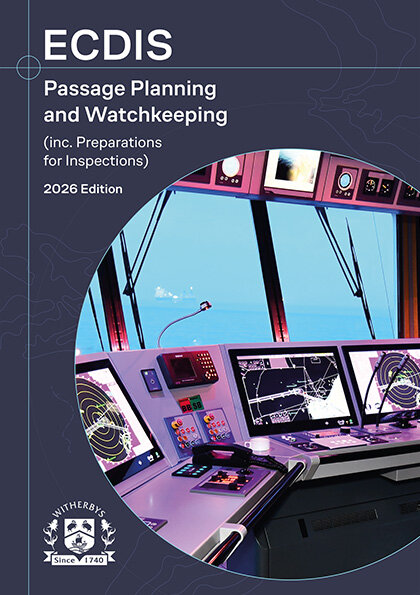
ECDIS Passage Planning and Watchkeeping 2026 Edition is a practical guide for ECDIS Passage Planning, safe watchkeeping, PSC inspection preparation, ECDIS configuration, route monitoring and bridge team navigation. It is designed for Masters, Officers of the Watch, deck officers, ECDIS operators and maritime professionals who need clear onboard guidance for safer voyage planning and monitoring.
About ECDIS Passage Planning and Watchkeeping 2026 Edition
The ECDIS Passage Planning and Watchkeeping 2026 Edition is a practical navigation reference for Masters, Officers of the Watch, deck officers, bridge teams and ECDIS operators who need to plan, execute and monitor voyages using ECDIS correctly.
This updated edition sets out procedures for the correct configuration of ECDIS and uses the APEM methodology — appraisal, planning, execution and monitoring — to explain best practice for passage planning and watchkeeping. It is designed to help navigators strengthen onboard ECDIS procedures, improve bridge team performance, prepare for inspections and apply safer navigation practices at sea.
For deck officers working towards stronger bridge knowledge and senior roles, this publication is a useful companion resource alongside the Academy by Ephemeris Deck career path, the Course Finder, and our wider collection of ECDIS books and navigation resources.
It also works well alongside the ECDIS Procedures Guide 2025, especially for officers who want to connect detailed ECDIS procedures with practical passage planning, route monitoring and onboard watchkeeping.
The 2026 edition includes updated guidance on ECDIS safety settings, passage planning checks, position verification, route monitoring, S-100 ECDIS content, Port State Control, audits and inspections. It also includes updated screenshots, expanded NAVTEX content, additional case studies and practical illustrations to support onboard application.
Why ECDIS Passage Planning and watchkeeping are essential
ECDIS is a core part of modern bridge operations, but safe use depends on more than displaying an electronic chart. Officers need to know how to configure the system, verify positions, manage safety settings, conduct route checks, monitor the voyage and recognise when ECDIS information needs to be challenged or confirmed by other methods.
The ECDIS Passage Planning and Watchkeeping 2026 Edition helps bridge teams understand how ECDIS should support the full passage planning process. It encourages operators to practise using available ECDIS functions and techniques, including route checks, automatic no-go alarms, 3D ENC functionality, ECDIS safety settings, NAVTEX information and voyage monitoring tools.
The publication is especially useful for:
- Masters,
- Chief Mates,
- Officers of the Watch,
- deck officers,
- ECDIS operators,
- bridge teams,
- deck cadets and maritime students,
- training centres,
- vessel managers,
- and vessels preparing for PSC inspections, audits or ECDIS verification checks.
This guide is also useful when used with the ECDIS Procedures Guide 2025, because it helps officers apply ECDIS procedures directly to voyage planning, monitoring, bridge team checks and everyday watchkeeping.
What is included in ECDIS Passage Planning and Watchkeeping 2026
The ECDIS Passage Planning and Watchkeeping 2026 Edition has been updated to reflect current ECDIS operation, inspection preparation and bridge team practice. The 2026 edition includes expanded S-100 ECDIS content, a dedicated chapter on Port State Control, audits and inspections, and additional case studies where incorrect ECDIS safety settings were a contributing factor.
This practical guide includes guidance on:
- ECDIS and passage planning requirements,
- IMO and IHO ECDIS standards,
- ECDIS training and operator requirements,
- the components of ECDIS,
- APEM passage planning,
- effective planning on ECDIS,
- configuration of ECDIS sensors,
- CCRP and technical setup,
- sensor settings and ECDIS alert management,
- depth contours and safety settings,
- safety contour, safety depth and insufficient UKC,
- cross track distance and safety corridor setup,
- detection areas and navigational hazards,
- chart display settings and ENC loading options,
- SCAMIN, SCAMAX, symbols and S-Mode,
- route display parameters and route alarms,
- appraisal and information gathering,
- ENC management, ENC updates and CATZOC review,
- route creation, route checks and voyage plan management,
- Master’s approval and bridge team briefing,
- voyage execution and monitoring,
- watchkeeping handover procedures,
- position monitoring and GNSS verification,
- ARPA, AIS overlay and radar information,
- anchor watch monitoring,
- SAR patterns and MOB functionality,
- ECDIS voyage recording and playback,
- sensor failure, GNSS failure and ECDIS failure,
- ECDIS cyber security,
- pilotage considerations,
- and preparation for PSC, audits and inspections.
Authoritative external references that may be useful for readers include the IMO ECDIS Guidance for Good Practice, the IHO S-100 standards, and the STCW Convention.
Key benefits of ECDIS Passage Planning and watchkeeping guidance
This guide helps maritime professionals:
- improve ECDIS passage planning and route monitoring,
- apply the APEM methodology more effectively,
- configure ECDIS safety settings with greater confidence,
- understand ECDIS position verification and GNSS checks,
- strengthen watchkeeping procedures,
- prepare for PSC inspections, audits and onboard checks,
- understand ECDIS system and backup requirements,
- improve ENC management and route checking,
- use ECDIS functions such as no-go alarms, 3D ENCs and voyage playback more effectively,
- support safer maritime navigation through better bridge team procedures,
- reduce the risk of poor planning, weak monitoring and over-reliance on ECDIS,
- and build stronger confidence in onboard ECDIS operations.
Core topics covered in ECDIS Passage Planning and Watchkeeping
The ECDIS Passage Planning and Watchkeeping 2026 Edition is structured around the practical knowledge required for safe ECDIS use before, during and after the voyage.
1. ECDIS Passage Planning requirements
This section explains ECDIS requirements, IMO standards, IHO standards, ECDIS training, the components of ECDIS, APEM passage planning and the principles of effective planning on ECDIS.
2. Configuration of ECDIS settings
This section covers the configuration of ECDIS sensors, CCRP and technical setup, sensor settings, alert management, depth contours, safety settings calculations, safety contour, safety depth, UKC considerations, detection areas, isolated dangers, chart display settings, ENC loading options, symbols, S-Mode and route display parameters.
3. Appraisal and information gathering
This section supports the appraisal stage of passage planning. It covers destination research, meteorology, passage planning in ice regions, datums, ENC scales and usage bands, HD ENCs, ENC review, ENC management and installation, ENC updates, CATZOC review and other passage planning considerations.
4. Planning the voyage
This section focuses on practical route creation and voyage planning. It includes display configuration, NAVTEX, Admiralty Information Overlay, new route creation, waypoints, route tables, mariner-added objects, manual ENC updates, route checks, voyage plan management, Master’s approval and bridge team briefing.
5. Execution, monitoring and watchkeeping
This section supports safe execution and watchkeeping. It covers ECDIS handover, GNSS position verification, position monitoring, waypoint passing criteria, ECDIS and track control systems, alarms and alerts, ETA management, ARPA and AIS overlay, anchor watch monitoring, SAR patterns, MOB functionality, ECDIS voyage recording, sensor failure, GNSS failure, cyber security and pilotage considerations.
6. Preparation for PSC, audits and inspections
The 2026 edition includes a dedicated section on preparation for Port State Control, audits and inspections. It covers ECDIS and passage planning verification checks, PSC and audit expectations, ECDIS system requirements, backup requirements, ENC requirements, operator requirements, voyage appraisal requirements, voyage planning requirements, voyage execution requirements, voyage monitoring requirements and verification summary checklists.
Who should buy ECDIS Passage Planning and Watchkeeping
The ECDIS Passage Planning and Watchkeeping 2026 Edition is ideal for:
- Masters,
- Chief Mates,
- Officers of the Watch,
- deck officers,
- ECDIS operators,
- bridge teams,
- deck cadets and maritime students,
- training organisations,
- vessel managers,
- ship operators,
- and yachts or vessels preparing for ECDIS inspections, PSC checks, audits or onboard familiarisation.
This guide is especially useful for officers who want a practical reference that supports route planning, watchkeeping, position verification, inspection preparation and safer ECDIS operation.
For yacht crew and maritime professionals, this guide supports onboard learning, bridge procedures, PSC preparation and long-term deck career development.
Why buy from Academy by Ephemeris
Academy by Ephemeris supports maritime professionals and yacht crew with trusted training resources, career development tools, course information and practical learning materials designed for real onboard use.
When you buy this guide through Academy, you can use it alongside our Books & Tools catalogue, the Deck career path, and the Course Finder to connect your learning resources with your wider career progression.
The ECDIS Procedures Guide 2025 is another useful Academy resource for officers who want broader ECDIS procedures, compliance guidance and onboard reference material alongside this passage planning and watchkeeping title.
This guide is a strong addition to any professional maritime library focused on ECDIS passage planning, watchkeeping, maritime navigation, PSC inspection readiness, bridge procedures and deck officer development.
ECDIS Passage Planning and Watchkeeping summary
The ECDIS Passage Planning and Watchkeeping 2026 Edition is a practical reference for deck officers, Masters, bridge teams and ECDIS operators. It supports safer maritime navigation by connecting ECDIS configuration, APEM passage planning, route checking, position verification, monitoring, watchkeeping and inspection preparation in one structured reference.
For bridge teams, the guide helps turn ECDIS from a display system into a safer decision-support tool for planning, execution and monitoring. It is especially useful for officers who want clearer onboard procedures, stronger inspection readiness and more confident ECDIS operation.
Frequently Asked Questions
What is ECDIS Passage Planning and Watchkeeping 2026 Edition?
ECDIS Passage Planning and Watchkeeping 2026 Edition is a professional maritime navigation reference covering ECDIS configuration, passage planning, route monitoring, watchkeeping, position verification, PSC inspection preparation, audits and onboard best practice.
Who should use this ECDIS passage planning guide?
This guide is designed for Masters, Officers of the Watch, Chief Mates, deck officers, ECDIS operators, bridge teams, maritime students, training centres and vessel operators.
Does this book help with PSC inspections and audits?
Yes. The 2026 edition includes a dedicated chapter on Port State Control, audits and inspections. It covers ECDIS and passage planning verification checks, system requirements, backup requirements, ENC requirements, operator requirements and voyage appraisal, planning, execution and monitoring requirements.
Does it cover the APEM passage planning method?
Yes. The guide uses the APEM methodology — appraisal, planning, execution and monitoring — to explain best practice for ECDIS passage planning and watchkeeping.
Does the 2026 edition include S-100 ECDIS content?
Yes. The 2026 edition includes expanded S-100 ECDIS content, helping bridge teams understand changes that affect future ECDIS use, chart data and maritime navigation.
Is this useful for onboard watchkeeping?
Yes. The guide supports onboard watchkeeping by covering handovers, position monitoring, GNSS verification, alarms and alerts, ETA management, ARPA and AIS overlay, anchor watch monitoring, sensor failure, GNSS failure and pilotage considerations.