


Description
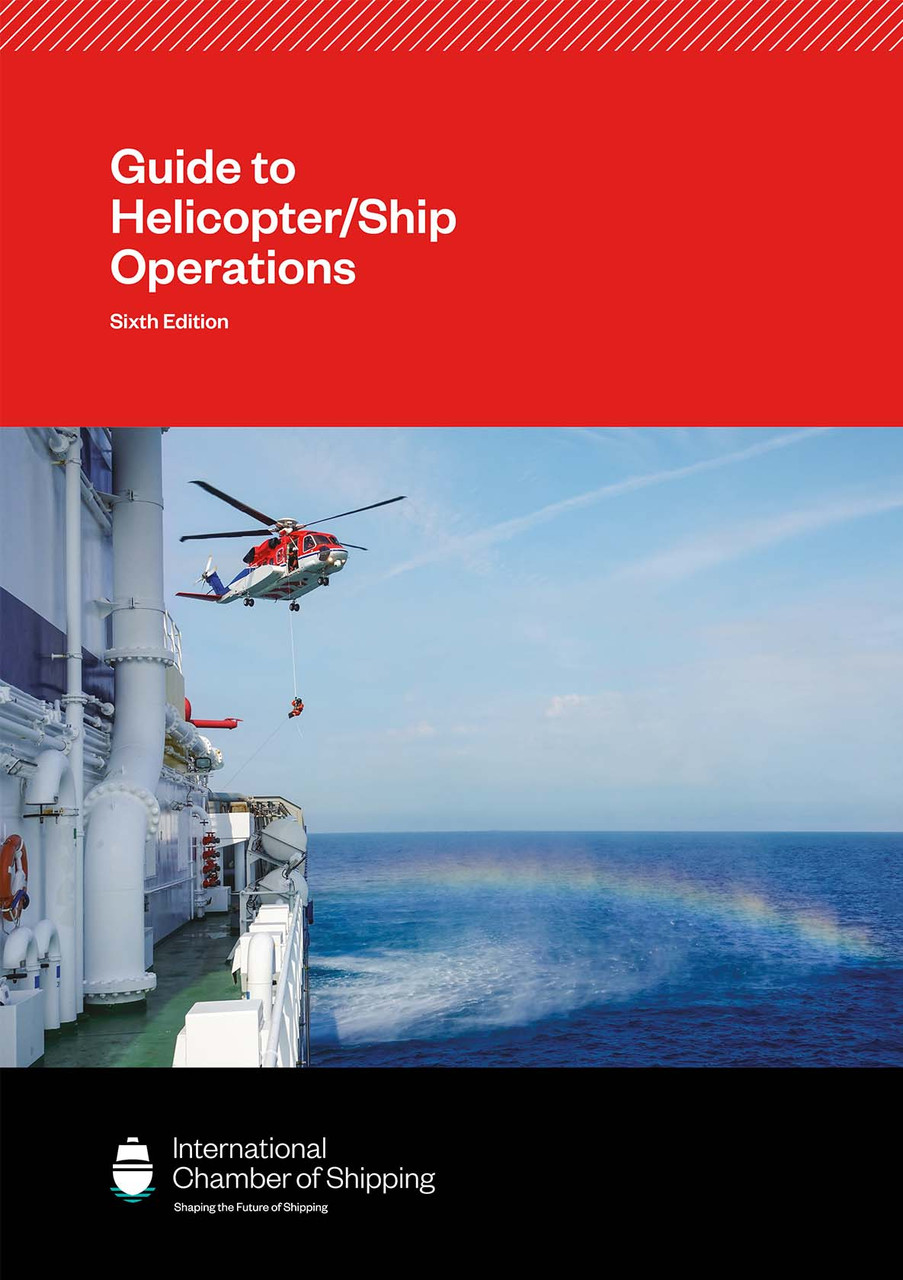
Guide to Helicopter Ship Operations is a practical helicopter ship operations guide designed to support safe, efficient, and well-coordinated helicopter operations at sea. It gives Masters, officers, crew, helicopter operators, and marine pilots clear guidance on landing, winching, communications, ship preparation, and emergency response.
This guide to helicopter ship operations covers the key safety and operational elements needed for helicopter work at sea, including operating-area design, landing and winching arrangements, environmental effects, firefighting and rescue equipment, communications, passenger handling, freight handling, bridge wing operations for marine pilot transfer, and emergency evacuation by air. As a helicopter ship operations guide, it supports clearer planning and safer execution of complex operations.
Why This Guide to Helicopter Ship Operations Is a Valuable Helicopter Ship Operations Guide
Helicopter operations at sea involve multiple teams, changing weather and sea conditions, communications challenges, and strict safety controls. This guide to helicopter ship operations helps reduce risk by setting out clear best practice for both landing and winching operations, with practical tools such as updated checklists, model risk-assessment matrices, and role guidance for shipboard personnel.
Because it is written as a helicopter ship operations guide, it is useful for both onboard reference and operational training. The current edition is aligned with the ICS Academy e-learning course and continues the guide’s long-standing role as an industry-standard reference for professional helicopter/ship operations. :contentReference[oaicite:2]{index=2}
Readers may also find useful Bridge Procedures Guide – Sixth Edition Book, Shipboard Drills Book, Shipboard Safety Officer Notes, and International Code of Signals (IA994E) Book. These titles support the same wider operational cluster of bridge procedures, emergency preparedness, safety management, and communications used during helicopter/ship operations. :contentReference[oaicite:3]{index=3}
Who Should Read This Guide to Helicopter Ship Operations and Helicopter Ship Operations Guide?
This guide to helicopter ship operations is ideal for Masters, deck officers, responsible officers, deck crew, marine pilots, ship operators, and helicopter operators who need a practical helicopter ship operations guide for planning, briefing, and carrying out safe helicopter transfers at sea.
Whether used onboard, in company procedures, or during training, it provides a strong reference for safer and more consistent helicopter operations across different ship types and operating conditions.
Contents:
Chapter 1 General guidance
1.1 Introduction
1.2 Selection of a helicopter operator
1.3 Provision of helicopter landing/operating area information
Chapter 2 General ship requirements
2.1 Ship operating areas
2.1.1 Types of operating areas
2.1.2 Location and size of operating area – Landing
2.1.3 Location and size of operating area – Winching
2.1.4 Poop deck platforms
2.1.5 Structural considerations (purpose built and non-purpose built landing areas)
2.2 Details of landing area
2.2.1 General guidance on markings
2.2.2 Markings for a landing area located at the ship’s side
2.2.3 Markings for amidships centreline landing area with or without restricted access from the ship’s side
2.3 Environmental effects
2.3.1 General considerations
2.3.2 Aerodynamic effects
2.3.3 Wave motion effects
2.4 Details of winching area
2.4.1 Positioning a winching area
2.4.2 Winching area on the bridge wing
2.4.3 Marking a winching area
2.5 Additional considerations for helicopter operating areas
2.6 Night operations: landing and winching area lighting
2.7 Firefighting appliances and rescue equipment
Chapter 3 Principles of operating safety
3.1 General principles
3.2 Marine responsibilities
3.2.1 Risk assessments
3.2.2 Helicopter operations risk assessment
3.2.3 Ship operator
3.2.4 Master
3.2.5 Responsible officer
3.2.6 Deck crew
3.2.7 Administrator
3.2.8 Officer of the watch
3.2.9 Passengers
3.3 Aviation responsibilities
3.3.1 Helicopter operator
3.3.2 Helicopter pilot
3.3.3 Helicopter winch person/crew member
Chapter 4 Communications
4.1 Communications
4.1.1 General guidance
4.1.2 Communications equipment
4.2 Pre-arrival arrangements
4.2.1 Weather conditions
4.2.2 Departure of helicopter from the heliport
4.2.3 Pre-arrival checks
4.3 Navigation
4.3.1 Identification of the ship
4.3.2 Manoeuvrability
4.4 Signalling procedures
4.4.1 Ships’ international signals
4.4.2 Visual signals to helicopter
4.4.3 Loss of radio communications
4.4.4 Warning signal
Chapter 5 Operating procedures
5.1 Basic operating procedures
5.1.1 Officer of the watch
5.1.2 Deck crew
5.1.3 Pre-arrival checks on the ship
5.1.4 Firefighting
5.1.5 The operating area
5.1.6 The helicopter
5.1.7 Emergency shutdown
5.2 Instructions to helicopter passengers
5.2.1 Passenger pre-flight briefing
5.2.2 Instructions to helicopter passengers transferring to and from ships
5.2.3 List of items prohibited for carriage in passengers’ baggage or on their person
5.3 Marine pilot transfer
5.4 Freight handling procedures
5.4.1 General freight handling
5.4.2 Carriage of dangerous goods
5.4.3 Carriage of freight and/or baggage in the passenger cabin with passengers
5.5 Helicopter landing and unloading
5.5.1 Landing
5.5.2 Disembarking passengers and freight from the helicopter
5.5.3 Operational safety
5.6 Helicopter hovering
5.6.1 Winching operations
5.6.2 Underslung loads
5.7 Helicopter loading and departure
5.7.1 Loading passengers and freight
5.7.2 Take-off
5.7.3 Departing
Chapter 6 Bridge wing operations for marine pilot transfer
6.1 General
6.2 Background
6.3 Bridge wings
6.4 Risks and controls
6.4.1 Risks and general mitigating elements
6.4.2 Proximity of operations to command centre of ship
6.4.3 Varied size and form of bridge wing winching area
6.4.4 Elevation above sea level
6.4.5 Weather and sea conditions
6.4.6 Proximity to hot gases and other emissions from the funnel
6.4.7 Night operations
6.4.8 Ship/helicopter communication
6.4.9 Briefing of ship’s crew
6.4.10 Bridge wing winching clear zone markings
Chapter 7 Requirements specific to different ship types
7.1 Tankers
7.1.1 Oil tankers
7.1.2 Chemical/parcel tankers
7.1.3 Vapour dispersal
7.1.4 Vapour emission control
7.1.5 Safety
7.1.6 Freeboard
7.2 Bulk carriers and combination carriers
7.2.1 General
7.2.2 Geared bulk carriers
7.2.3 Gearless bulk carriers
7.3 Containerships
7.4 Gas carriers
7.4.1 Design limitations
7.4.2 Vapour emission control
7.5 General cargo ships
7.6 Passenger ships
7.7 Offshore operations
Chapter 8 Helicopter landing/operating area plan
8.1 Provision of helicopter landing/operating area plan
8.2 Helicopter landing/operating area plan
8.3 Completion of helicopter landing/operating area plan
8.4 Ship’s side helicopter landing/operating area plan
8.5 Centreline/amidships helicopter landing/operating area plan
8.6 ‘Winch only’ helicopter landing/operating area plan
Chapter 9 Emergency evacuation by air
9.1 General
9.2 Illness or injury evacuation
9.2.1 Requesting assistance
9.2.2 Preparation of patient
9.3 Emergency operating areas
Chapter 10 Emergencies
10.1 General
10.2 Helicopter accident procedure
10.3 Fire procedures
10.4 Emergency procedures
10.4.1 Crash on deck
10.4.2 Emergency/precautionary landing
10.4.3 Crash on deck, major fuel spillage – no fire
10.4.4 Helicopter incident on landing
10.4.5 Man overboard (MOB)
10.4.6 Helicopter ditching
10.5 Helicopter ditching
10.6 Plan of action
Appendices
Appendix A – Shipboard safety checklist for helicopter operations
Appendix B – Communications
Appendix C – Landing – Model risk assessment matrix
Appendix D – Winching – Model risk assessment matrix
Appendix E – Aide memoire for the responsible officer
Appendix F – Information to be given to passengers
Appendix G – Example Toolbox Talk before a helicopter operation
Appendix H – Commercial helicopters in marine use
Appendix I – Helicopter operating guidance
Appendix J – Relevant publications
This guide to helicopter ship operations is a practical helicopter ship operations guide for anyone responsible for helicopter transfers at sea. By combining operational detail, role clarity, communications guidance, and emergency procedures, it helps support safer and more professional helicopter/ship operations.
Frequently Asked Questions
What is this guide to helicopter ship operations used for?
It is used as a helicopter ship operations guide to support safe landing, winching, communications, and emergency procedures during helicopter operations at sea.
Does this helicopter ship operations guide cover risk assessments?
Yes, the current edition includes model risk-assessment tools for both landing and winching operations.
Who should read this guide to helicopter ship operations?
It is suitable for Masters, officers, deck crew, marine pilots, ship operators, and helicopter operators involved in shipboard helicopter work.
Does it cover marine pilot transfer?
Yes, it includes bridge wing operations for marine pilot transfer as part of its operating guidance.
Is it useful for emergency procedures?
Yes, it covers emergency evacuation by air, helicopter incidents, fire procedures, ditching, and other emergency response topics.


